
Beijing has been wary of Sanae Takaichi's efforts to boost Japan's military profile since taking office six months ago, points out Dr Rajaram Panda.
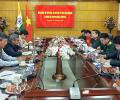
The 15th India-Vietnam Defence Dialogue signalled a move from routine talks to deeper cooperation, with new deals on submarine rescue and defence industry to support stability in the Indo-Pacific, notes Dr Rajaram Panda.
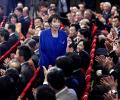
As a protege of Shinzo Abe, Takaichi is expected to scale bilateral ties much higher. Trade and investment shall grow. People-to-people contacts shall be scaled up, points out Dr Rajaram Panda.
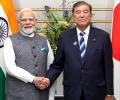
Prime Minister Shigeru Ishiba's sudden resignation after only a year in office has thrown Japan into political turmoil, raising doubts about how the country will handle economic and regional challenges, observes Dr Rajaram Panda.

Lee Jae-myung's decisive victory in South Korea's snap presidential election marks a major political shift driven by public backlash against authoritarian, with significant implications for domestic reform and the future of the US-South Korea alliance, observes Dr Rajaram Panda.

It would be a challenge to India's policy makers how to deal with Trump so that mutual economic growth remains sustained and mutual understanding on global issues are not hampered, observes Dr Rajaram Panda.

There is nothing to be worried about as bilateral ties are robust with solid foundations. Both are on the same page on the economic and defence/security ties bilaterally and globally and that shall continue irrespective of change in political dispensation in either country, points out Dr Rajaram Panda.

Shigeru Ishiba is expected to prioritise strengthening Japan's military capabilities and fostering deeper international partnerships, particularly with India, with whom Japan shares significant strategic interests, explains Dr Rajaram Panda.

The compulsion behind India and Japan to deepen security cooperation is in response to China's growing political and economic clout and its assertive behaviour in disputed areas. This has been the key driver for bringing both India and Japan closer in the domain of security cooperation, explains Dr Rajaram Panda.

The trigger that led Japan and the Philippines to ink the deal was because of the deteriorating security situation in the South China Sea. China's coast guard increased the frequency and intensity of incursions into Philippine waters, provoking the Philippines to take countermeasures to deter China, explains Dr Rajaram Panda.

Russia's unprecedented rapprochement with North Korea has raised concerns about the re-emergence of a Russia-China-North Korea alliance which could increase the probability of conflict on the Korean Peninsula, explains Dr Rajaram Panda.

Two of Xi Jinping's chosen officials have disappeared from view, an indication of turmoil in Xi's government, months after he installed a collection of loyalist leaders in his cabinet, observes Dr Rajaram Panda.

The impact of Shinzo Abe's towering personality is such that even in death, Abe remains a polarising figure, asserts Dr Rajaram Panda.

Kim Jong-un declared he would never surrender North Korea's nuclear weapons weapons even if his country faced 100 years of sanctions. Dr Rajaram Panda explains Pyongyang's new nuclear doctrine that makes the world a much more dangerous place.
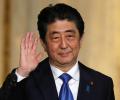
It is for the investigating agencies to probe all aspects of the assassination, including a possible Chinese hand, or if the killer was just a disgruntled element who acted on his own and wanted to earn some dark space in history like Nathuram Godse or Lee Harvey Oswald, notes Japan expert Rajaram Panda.

China, the Ukraine crisis and Quad will dominate the discussions, observes Dr Rajaram Panda.

Two women are in contention to become prime minister for the first time in Japan's history -- a potential turning point for a country that ranks below Saudi Arabia in terms of female political representation, points out Rajaram Panda.

As an admirer of Japan for close to half a century, I care for Japan and expect Suga to respect the sentiment of his people and cancel the Olympics without further delay, says Rajaram Panda.

'The lessons learnt from the triple disaster have put Japan's energy future On the right path,' notes Dr Rajaram Panda.

COVID-19 has emerged as an important form of diplomatic currency around the world as nations try to showcase their soft power gains. In this race, India has an edge as India is already a pharmaceutical giant having produced some 60 per cent of global vaccines and now justly seeking to strengthen ties and expand its influence in its neighbourhood and beyond, observes Dr Rajaram Panda.
 © 2026 Rediff.com - Advertise with us - Disclaimer - Privacy Policy - Sitemap - Feedback - About us - Terms of use - Grievances